£11.95
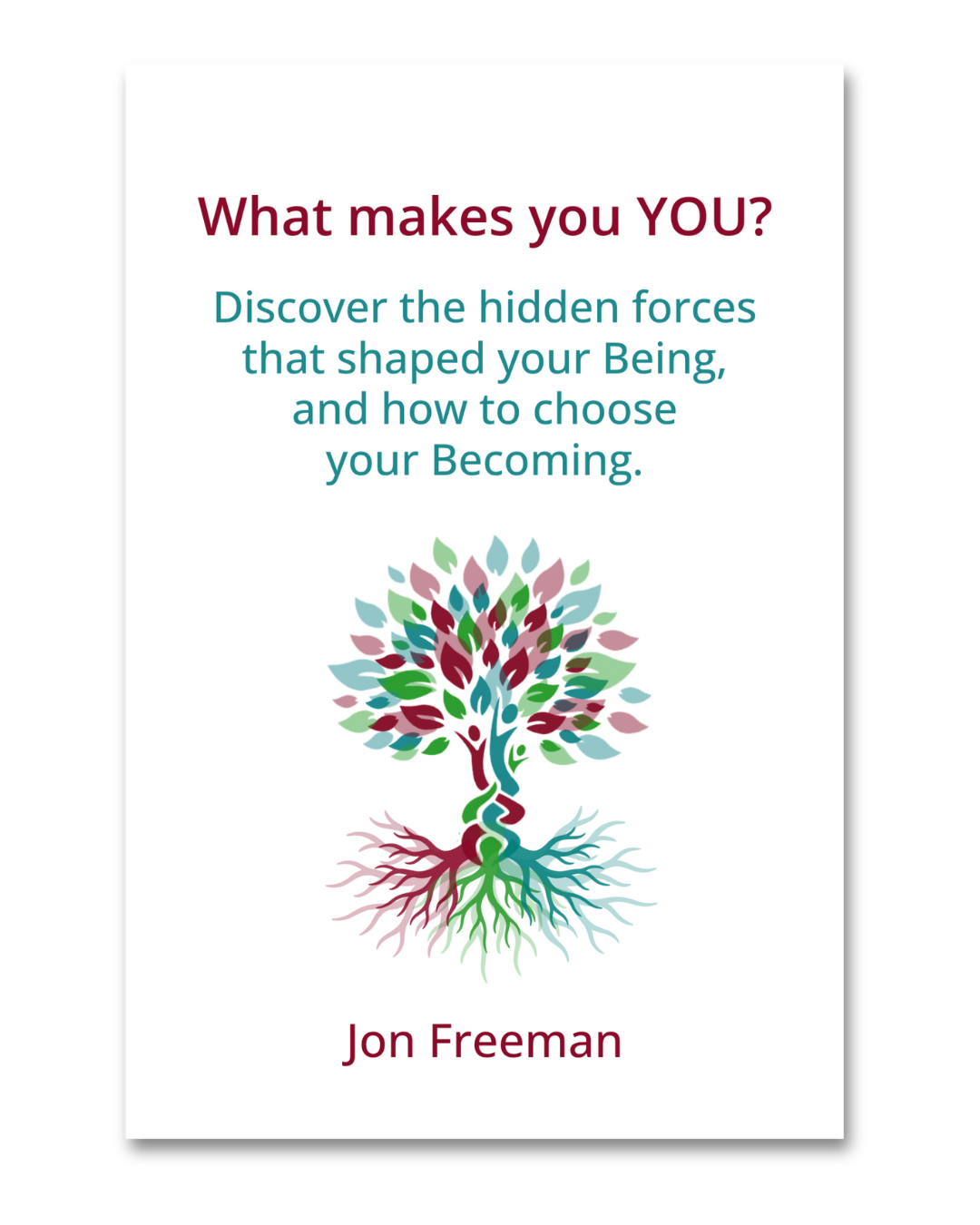
What makes you You?
Discover the hidden forces that shaped your Being – and how to choose your Becoming
Who are you, really? What’s the living, evolving intelligence of mind, body and soul beneath it all? This book opens a deep inquiry into the forces that shape you: family, ancestry, early experience, education, culture, biology, consciousness,
and the invisible fields of information and connection that move through your life
Drawing on personal narrative, scientific insight, and experiential knowledge, the book leads readers towards the forces that make us and ultimately shows how we can consciously choose who we become.
Read more here
Direct Download via Bookfunnel
It is well-known that many shamanistic cultures experience direct connections with the spirits of plants and animals. Assuming that you don’t regard that as illusion or projection, you might ask - what is that for us and for today’s world?
There are “modern shamans” – people who work with that realm of connection. In fact there are many – horse whisperers, plant spirit medicine practitioners for example. There are well-known examples of people who garden in collaboration with nature, and books such as Dorothy Maclean’s “To hear the Angels Sing”, which describes how enormous vegetables were produced in the seemingly barren soils of Findhorn. Machaelle Small Wright has given in-depth accounts of how she created the Perelandra garden.
There are also stories of animals – particularly horses - being used in healing. There is a great story of one such in my Substack “A tale of a psychic horse”. I also talk about nature spirits in the “What’s Nature to you” chapter of “What makes you YOU” and the chapter on shamanism in “The Science of Possibility”.
It is an inevitable outcome of the “information field” as a central theoretical theme in both books, that our ability to connect with what animates other parts of the living world will reveal itself in many ways.”
Read this substack article: The Tale of the Psycic Horse
Sign-up for our Newsletter! We promise not to spam you!
You have successfully joined our subscriber list.